Electrical takeoff calculator.
Type in your device counts per area — receptacles, switches, fixtures and data drops. Get the full rough-in list — boxes, branch wire or EMT, breakers, panel size, Cat6 — and download it as a proper Excel takeoff template with live formulas.
| Area / room | Receptacles | Switches | Light fixtures | Data drops | Devices |
|---|
| Material | Qty | Unit | How it’s figured |
|---|
How the math works
Every factor in this calculator is a standard rough-in estimating rule of thumb, and every one of them is visible in the Excel download so you can audit or adjust it:
- Total devices — receptacles + switches + fixtures per area (data drops are counted separately as low-voltage).
- Device boxes — one 4″ square box with mud ring per receptacle and per switch.
- Fixture boxes — one per light fixture; LV brackets — one low-voltage mounting bracket per data drop.
- Branch wiring — (receptacles + switches + fixtures) × your average run per device × (1 + waste %).
- EMT + THHN — that length becomes EMT conduit; THHN conductors = EMT × 3; couplings = EMT ÷ 10; connectors = boxes × 2; straps = EMT ÷ 8 (all rounded up).
- NM-B / MC — that length becomes cable; staples or straps = cable LF ÷ 4.5; connectors = boxes × 2 (rounded up).
- Data — Cat6 LF = data drops × average run × (1 + waste); one keystone jack per drop; patch-panel ports sized to drop count.
- Branch circuits — receptacle circuits = receptacles ÷ 8, lighting circuits = fixtures ÷ 12, both rounded up; total 20A single-pole breakers is the sum.
- Panel — total circuits × 1.25 spare; a 42-circuit panel is suggested above 24 circuits, otherwise a 24-circuit panel.
- Finish & misc — spec-grade TR receptacles and switches by count; cover plates = receptacles + switches; wire nuts = (device boxes + fixture boxes) × 4; ground pigtails = one per device box.
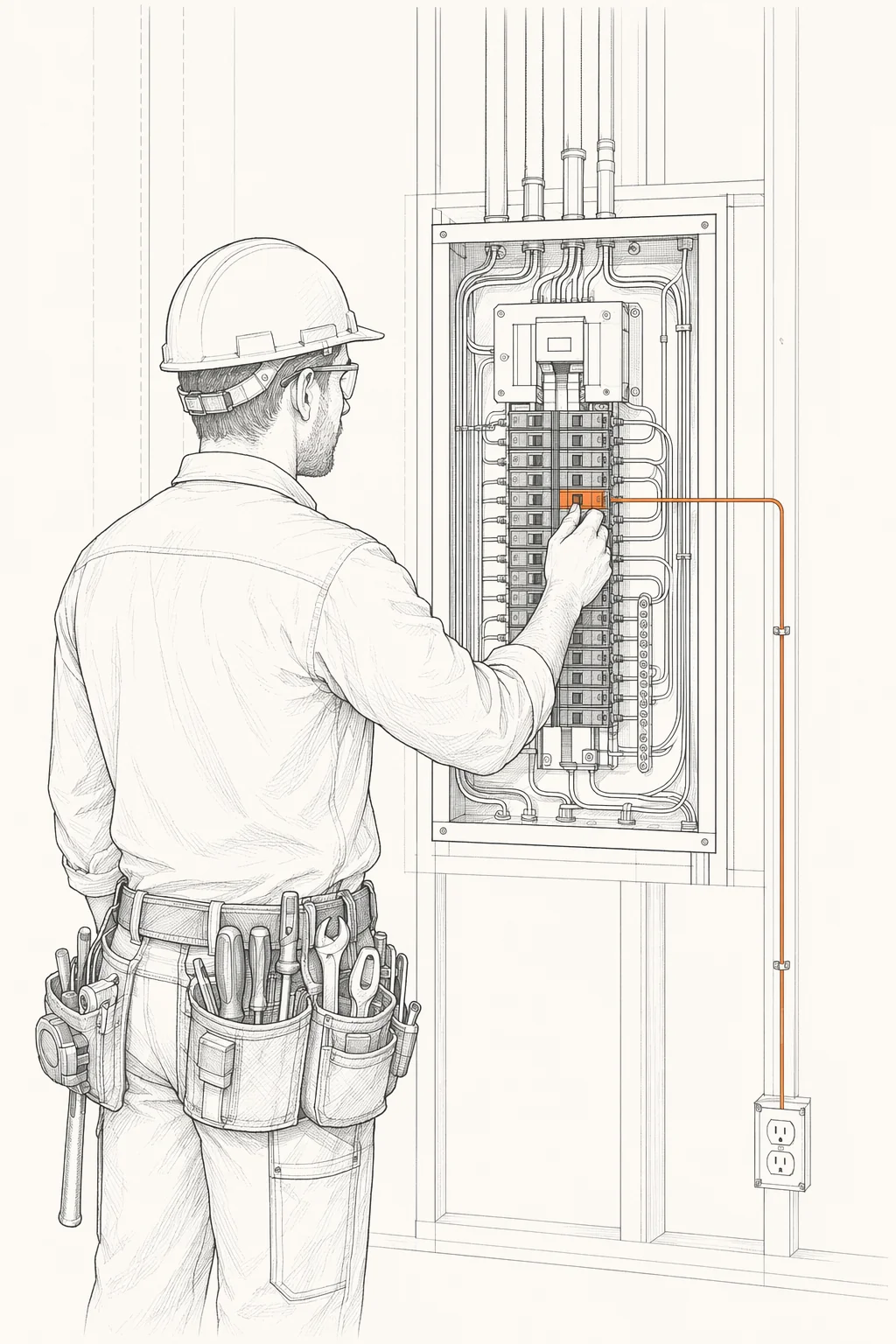
This is the easy 20%. The other 80% is on your drawings.
A device-count calculator prices the rough-in you can already see. What it can’t do is read your set: the lighting schedule that drives fixture types and controls, the panel schedules that set feeder and breaker sizes, the one-line that defines your service and distribution, the homerun lengths buried across a dozen sheets. That’s the part of an electrical bid that leaks money — and it’s exactly what Pilars AI takeoff does from your actual plans: it reads the symbol legend, counts every device on every sheet, follows the lighting and panel schedules, and returns devices, wire, conduit, gear and finish by type. $100 per trade, per plan.
Questions estimators actually ask
How does the calculator figure wire and conduit?
It takes your devices (receptacles + switches + fixtures) × the average home-run / branch run you set per device × (1 + waste). With EMT + THHN selected it treats that length as EMT and multiplies by 3 for THHN conductors; with NM-B (Romex) or MC cable it treats the length as cable and adds staples or straps every 4.5 ft.
What materials does it calculate from device counts?
Device boxes for receptacles and switches, fixture boxes, low-voltage brackets for data, branch wire or EMT + THHN with couplings, connectors and straps, Cat6 cable and keystone jacks, 20A breakers with a suggested panel size, finish devices, cover plates, wire nuts and ground pigtails.
Can I download the takeoff as an Excel file?
Yes — one click exports a real .xlsx workbook with an Areas sheet and a Materials sheet. The cells carry live Excel formulas, so you can change device counts, run length or waste inside Excel and everything recalculates. There’s a blank reusable template too.
How does it size circuits and the panel?
Receptacle circuits = receptacles ÷ devices-per-circuit (default 8), lighting circuits = fixtures ÷ fixtures-per-circuit (default 12), both rounded up. Total 20A single-pole breakers is the sum. It then adds 25% spare capacity and suggests a 24- or 42-circuit panel.
Is this as accurate as a real plan takeoff?
It’s a fast estimating tool built on standard rough-in factors. It doesn’t read your lighting schedule, panel schedules or one-line diagram — that’s what Pilars does from your actual drawings for $100 per trade.
Let Pilars take off your whole set.
Upload your plans. Pilars reads the symbol legend, counts every device, follows the lighting and panel schedules, and returns the full electrical takeoff — devices, wire, conduit, gear and finish by type. $100 per trade.