Takeoff software
for estimators.
Your day isn't tracing lines — it's deciding which jobs to bid, chasing addenda, and leveling subs while the clock runs. Pilars takes the measuring off your plate so your judgment goes where it actually wins work.
The estimator's real day
Software vendors love to show takeoff as if it's the whole job. It isn't. The job starts at the bid board — too many invitations, not enough hours, and the first real skill is triage: which jobs fit, which GC actually pays, which scope you can win and still make money on. Pick wrong and the rest of the week is wasted on a job you were never going to land.
Then come the drawings, the spec book, the RFIs, and the addendum that drops at 4pm two days before bid day and quietly redraws half the plan. And on the back end, leveling — making three subs' apples-to-oranges numbers comparable so you can carry the right one. Tracing quantities is somewhere in the middle of all that, and it's the part that eats the most hours while contributing the least judgment. That's exactly the part worth handing to software.
What changes with AI takeoff
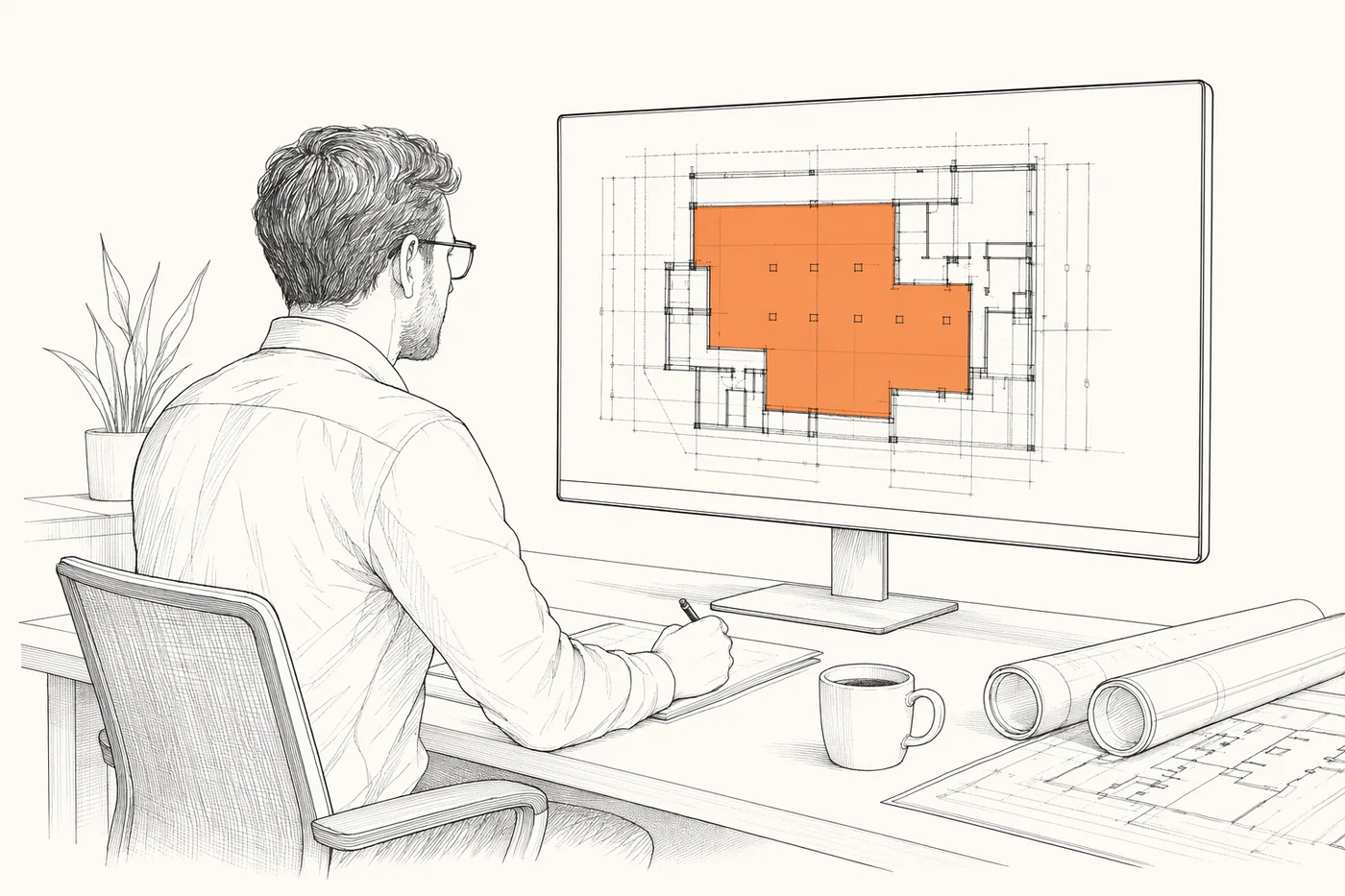
The headline shift is one phrase: review, don't trace. Instead of opening a blank set and measuring every line by hand, you open quantities Pilars has already produced and spend your time checking them. Your expertise stops being spent on the mechanical labor of measuring and goes to the parts only you can do — judging the questionable run, catching what the drawings left vague, deciding how to carry the risk.
Triage faster
When a rough takeoff takes minutes instead of a day, you can scope more invitations before committing real time. Bid the jobs that fit and walk from the ones that don't, earlier.
Addenda without dread
A revised set means re-running, not re-tracing. Review the deltas instead of redrawing half the plan by hand the night before bid day.
Bid more, not longer
The hours you get back go straight into bid volume. More bids out the door is more chances to win, without adding headcount or weekends.
Judgment where it counts
You stay the estimator. The software measures; you decide. The ambiguous detail still gets a human read — and Pilars flags it instead of guessing.
If you've weighed automated against manual before, our AI vs manual takeoff breakdown goes deeper on the trade-off.
The hours go where they should
Sit with any estimator through a bid week and the math is brutal. A meaningful chunk of every bid is spent on takeoff — measuring, counting, re-measuring when a quantity looks off, re-measuring again when the addendum lands. None of that is the work that actually wins jobs. The work that wins jobs is knowing which GC to trust, reading the spec for the scope that'll bite you, pricing the risk on the vague detail, and leveling subs so you carry the right number. But when takeoff eats the day, the judgment work gets squeezed into whatever's left — usually a rushed couple of hours before the deadline.
Flip that. When the measuring is automated and you're reviewing instead of tracing, the proportions invert. You spend the bulk of your time on the decisions, and a fraction on confirming the quantities. That doesn't just make a single bid better — it changes how many bids you can responsibly put out. An estimator who can scope and review three jobs in the time it used to take to trace one is worth far more to a shop than the same estimator stuck on a digitizer all week. And it's more sustainable: the part of estimating people burn out on is the late-night tracing, not the deciding.
Built for the way teams bid
Precon is rarely a solo act. A senior estimator scopes and levels, a junior runs takeoffs, a reviewer signs off, and a seasonal hand shows up for the busy stretch. Software priced per seat fights that structure — every person you add is another license, so the tool that made sense for one estimator becomes a budget conversation at four. Pilars is priced per trade, not per seat, so the whole team works under one flat number and you're never deciding whether someone "needs" a license to help during crunch. Work lives in the cloud, on any machine, so the junior on a laptop and the reviewer at home are looking at the same job.
What estimators should evaluate
Whatever you choose — including us — judge it on the things that matter when a number gets questioned, not on a slick demo. Four checks:
- Accuracy verification. Can you check the software's quantities against the drawings quickly and clearly? Numbers you can't verify are numbers you can't trust. Look at how the tool lets you trace a quantity back to the plan — and see our accuracy page for the test that actually proves it.
- Audit trail. When a GC or your own PM asks where a number came from, you need to point to the source on the drawings, not shrug. A real audit trail keeps every quantity defensible.
- Export. Quantities should drop into Excel or your estimating system without re-keying. Re-typing numbers is both slow and a fresh chance to introduce an error.
- Pricing model. Does it punish adding estimators? Per-seat pricing taxes the exact thing a growing precon team needs to do. Model your real team — the pricing comparison lays the whole market out.
Then run the only test that counts: take a real set you've already bid by hand and run your finalists on it. Compare quantity for quantity and time your review against your manual process. Vendor sample plans are chosen to look good; your messy set tells the truth.
Where Pilars lands
For the record, here's how Pilars answers each of those checks. Accuracy verification: every quantity traces back to the drawing, so review is fast and the number is defensible. Audit trail: you can always point to where a quantity came from. Export: clean to Excel and into your estimating workflow, no re-keying. Pricing: $100 per trade per plan, no per-seat fees, so your whole team — and your seasonal help — works under one number. It's fully automated, cloud, and built so the estimator stays in the seat that matters: reviewing and deciding, not tracing. The honest way to confirm any of that is to run it on your own plans, which is exactly what the live demo lets you do.
What estimators ask
What takeoff software do estimators actually use?
Most estimators still use manual desktop tools like PlanSwift or Bluebeam, plus a spreadsheet or estimating system. The shift underway is toward AI takeoff, where the software produces the quantities and the estimator reviews them. Pilars is built for that workflow — review instead of trace, with an audit trail and Excel export.
How does AI takeoff change an estimator's job?
It moves you from tracing to reviewing. Instead of measuring every line by hand, you start with quantities the software has produced and spend your time verifying them, chasing addenda, and leveling subs. Your judgment goes to the parts that need it, not to the mechanical labor of measuring.
Can AI takeoff handle addenda and revisions?
Re-running a takeoff on a revised set is fast when the software does the measuring. Instead of re-tracing affected areas by hand under deadline, you re-run and review the deltas. That makes the constant churn of addenda far less painful during a bid week.
What should estimators evaluate in takeoff software?
Accuracy verification — can you check the quantities against the drawings easily; an audit trail — can you defend a number when it's questioned; export — does it drop cleanly into Excel or your estimating system; and pricing model — does it punish adding estimators. Test all of it on a real set you already know, not a vendor demo.
Does Pilars export to Excel and estimating systems?
Yes. Quantities export to Excel so they drop straight into your estimate or estimating system without re-keying, and every quantity stays traceable back to the drawings for review and defense. Pilars is $100 per trade per plan with no per-seat fees.